Weekly Planning Ritual
6/2/20268 min read
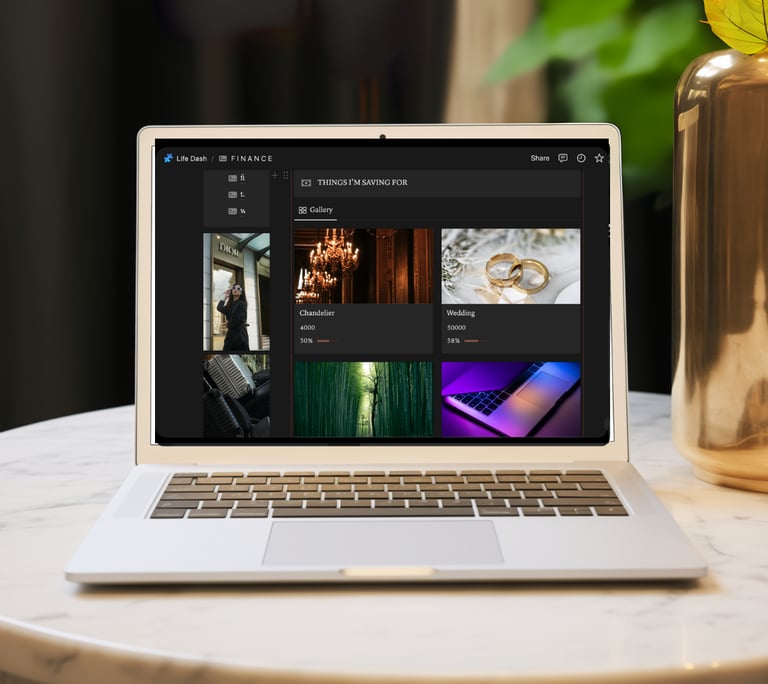
A well-designed Notion Weekly Planner Template becomes more than a productivity tool-it transforms into a workspace you return to with intention. When planning feels clear and beautiful, the act of organizing your week shifts from obligation to ritual. The right template creates a foundation that supports both structure and flexibility, allowing your plans to breathe while keeping you anchored to what matters most.
Why Weekly Planning Deserves Thoughtful Design
Digital planning environments shape our relationship with time and tasks. A notion weekly planner template crafted with care reflects the understanding that aesthetics and function are inseparable. When your planning space feels cohesive and visually calm, you're more likely to engage with it consistently.
Consider the difference between opening a cluttered spreadsheet and stepping into a thoughtfully designed space. The latter invites you in. It reduces friction. Beautiful design isn't superficial-it's functional architecture that supports your cognitive load and decision-making process throughout the week.
The Connection Between Environment and Follow-Through
Our brains respond to visual harmony. A template with balanced spacing, intentional color usage, and clear hierarchies helps information land differently. When weekly planning flows naturally from one section to another, you spend less mental energy deciphering the system and more energy actually planning.
Key elements that support sustained use:
Visual consistency across all weekly views
Clear distinction between different priority levels
Intuitive navigation that reduces clicks
Space for both scheduled tasks and emerging priorities
Room for reflection without overwhelming the layout
This approach to design recognizes that follow-through isn't just about willpower. It's about creating conditions where the desired behavior becomes easiest.
Essential Components of an Effective Weekly Template
A comprehensive notion weekly planner template balances structure with breathing room.
Daily Task Organization
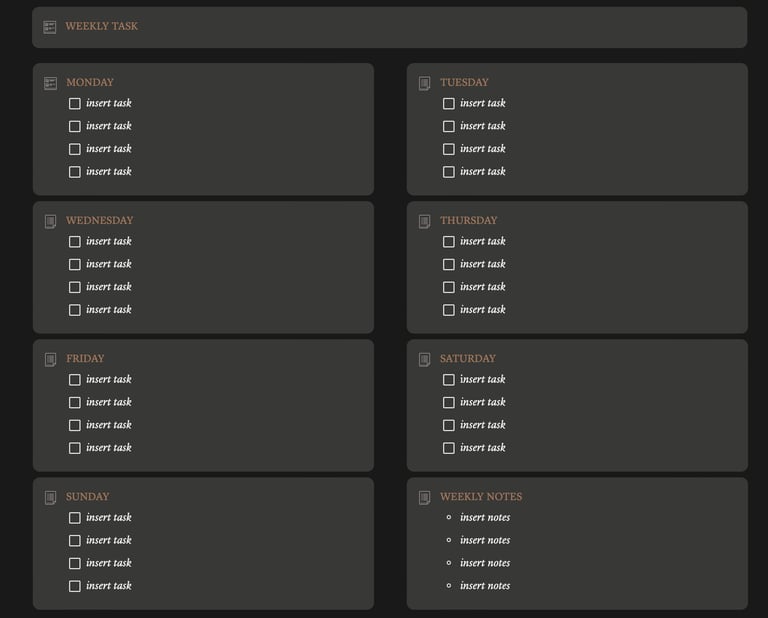
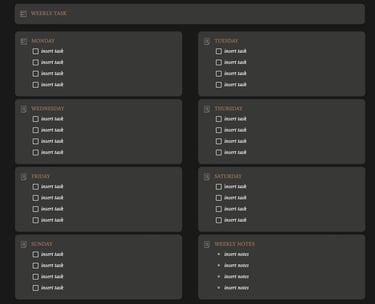
Each day deserves its own container within the larger weekly view. This segmentation helps you see the forest and the trees simultaneously-understanding both the day's immediate demands and the week's broader arc.
Priority and Focus Areas
Beyond daily tasks, weekly planning requires perspective on what deserves your sustained attention.
This table structure isn't prescriptive-it's a starting framework. The right notion weekly planner template allows you to adapt these categories to your actual life, not force your life into predetermined boxes.
Habit and Routine Tracking
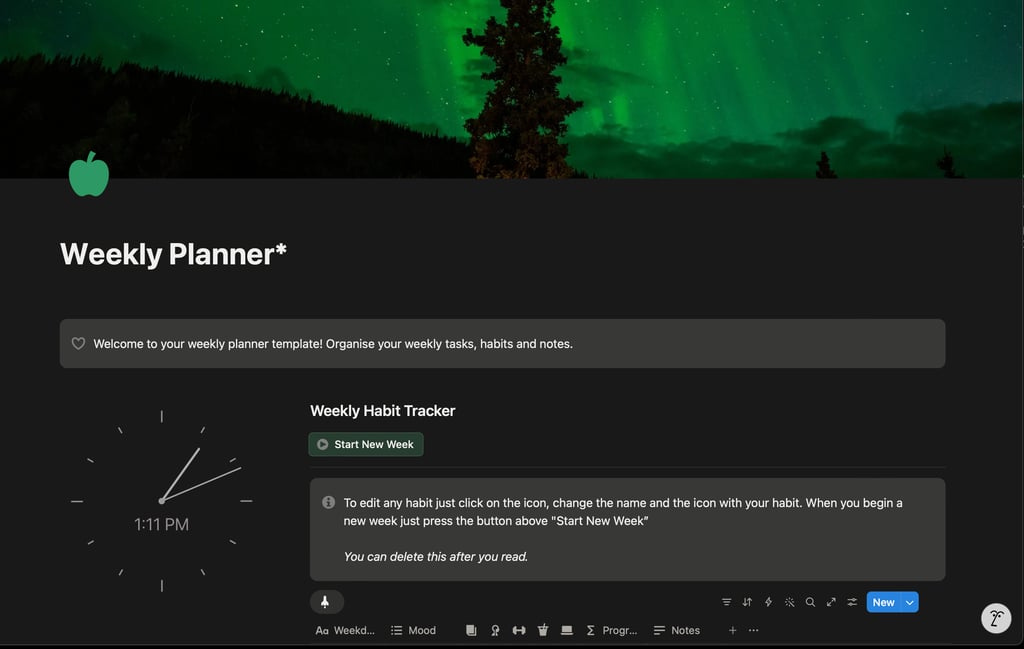
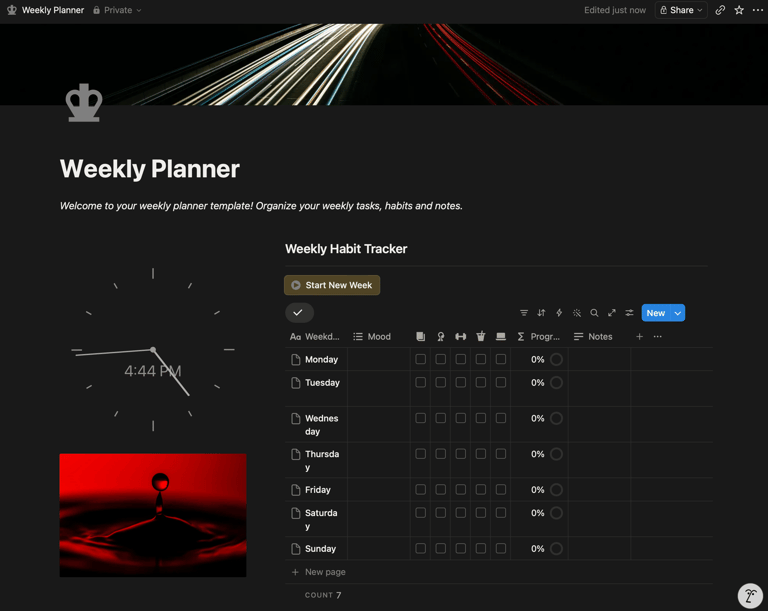
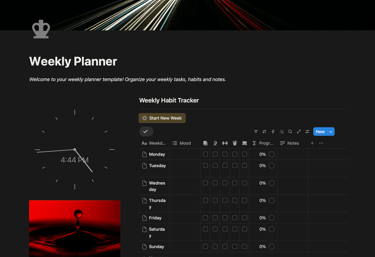
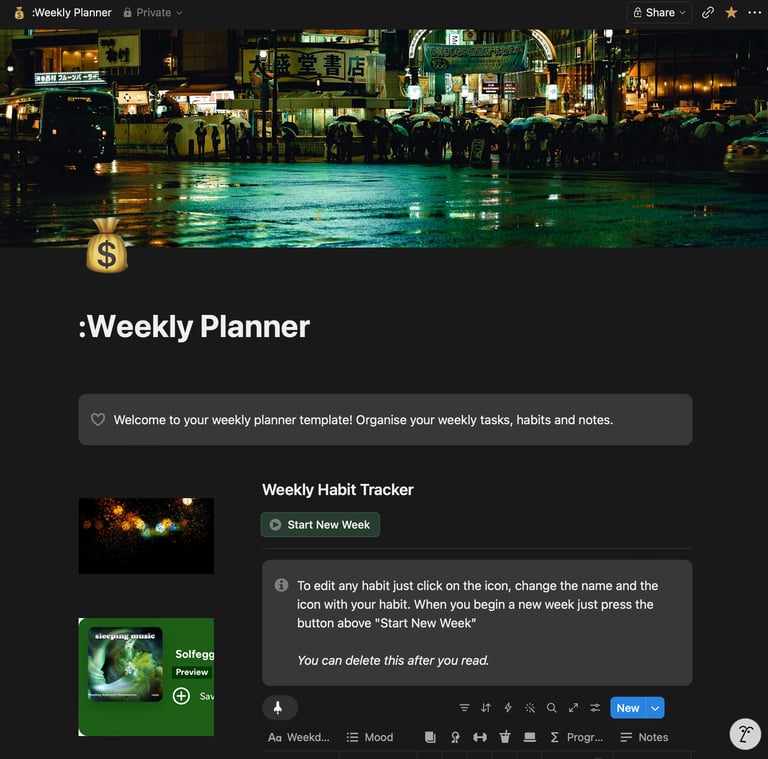
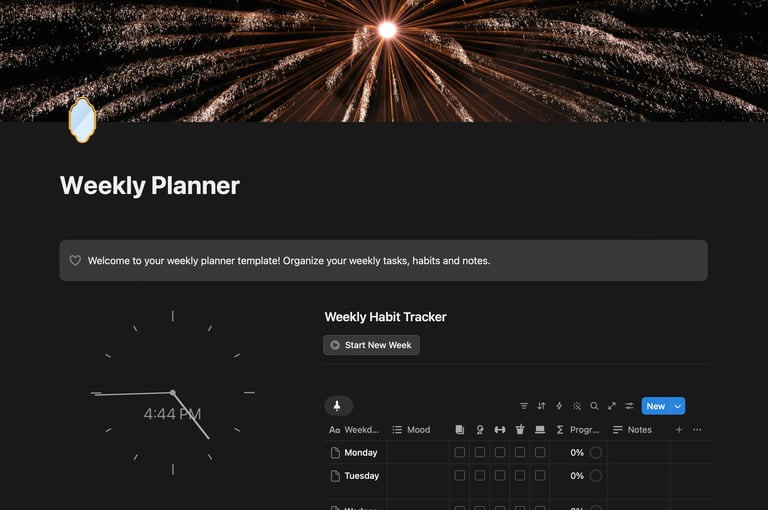
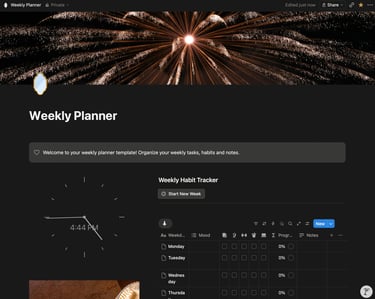
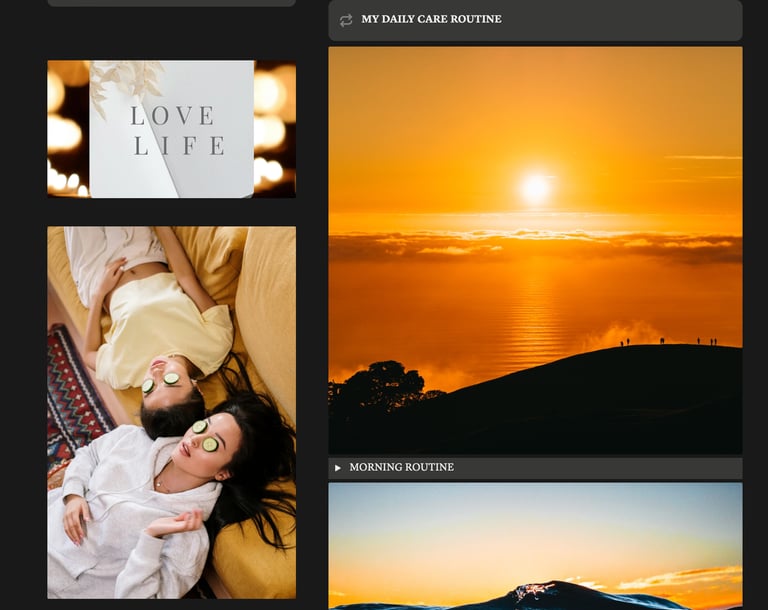
Weekly templates excel at bridging the gap between single days and longer timeframes. Habit tracking within a weekly context shows patterns that daily planning might miss. You notice when Wednesday mornings consistently feel rushed, or when Friday afternoons open up space for creative work.
The advanced weekly planner demonstrates how capturing completed actions alongside future tasks creates a satisfying visual record. This retrospective view matters-it counters the productivity trap of always looking forward, never acknowledging what you've already accomplished.
Customizing Templates for Your Actual Life
Pre-built templates save hours of setup time and adding more personalization transforms them from generic tools into genuine companions.
Adapting Structure to Personal Needs
Some people need granular time-blocking. Others benefit from loose task buckets. A notion weekly planner template should flex to accommodate both approaches, perhaps even within the same week.
Common customization areas:
Adding custom properties for energy levels or focus type
Creating filtered views for different life domains (work, personal, creative)
Adjusting color schemes to match your visual preferences
Building in reflection prompts that resonate with your self-awareness practice
For those exploring life planners as part of a broader organization system, the weekly template often becomes the tactical layer beneath monthly and yearly views. This nested structure prevents weekly planning from existing in isolation.
Integration with Other Planning Layers
Weekly planning gains depth when connected to larger time horizons. Your weekly priorities should ladder up to monthly intentions, which connect to quarterly goals, which align with annual visions. Without these connections, weekly planning can feel reactive rather than directional.
The minimalist weekly planner philosophy proves that integration doesn't require complexity. Simple linked databases can connect your weekly task list to a master projects database, ensuring every action has context.
Design Elements That Enhance Usability
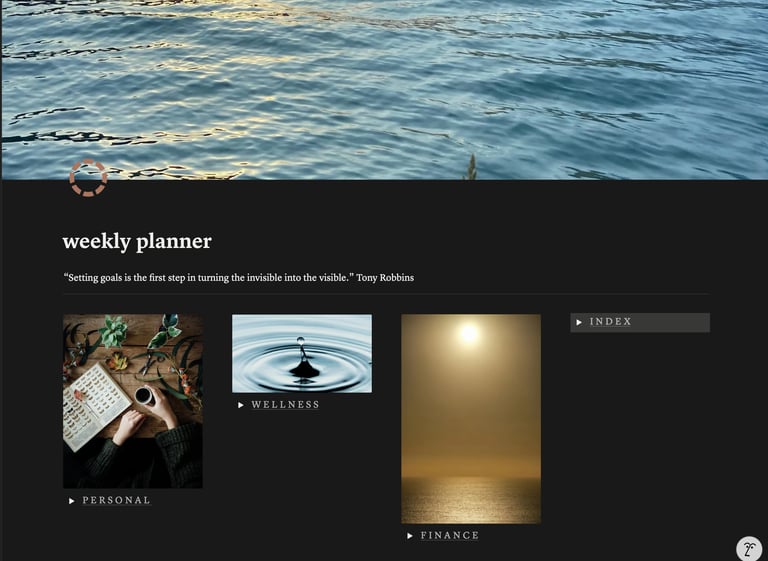
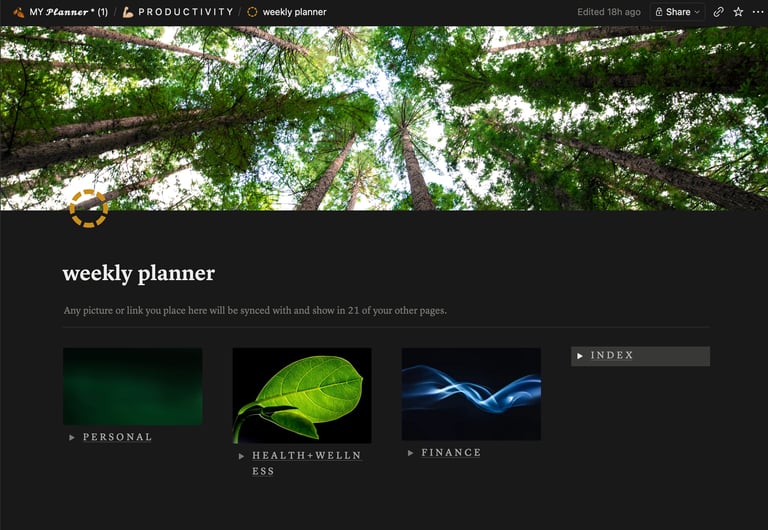
Aesthetics in planning templates isn't decoration-it's information architecture made visible. When you explore options through free weekly planner templates, notice which ones feel immediately navigable and which require mental translation.
Visual Hierarchy and Scan-ability
Your eyes should land on the most important information first, every time.
Some useful design principles:
Whitespace gives information room to breathe and prevents cognitive overwhelm
Consistent icon usage creates visual anchors that speed up recognition
Thoughtful color application differentiates categories without creating visual noise
Typography hierarchy signals relative importance without requiring you to read every word
These elements work together to reduce the mental load of engaging with your planner. When scanning your week takes seconds instead of minutes, you're more likely to do it multiple times daily.
Mobile and Desktop Considerations
Planning happens everywhere. The weekly to-do list template's color-coded approach and auto-hide completed tasks feature demonstrates how good design adapts across devices. What works on a large monitor should remain functional on a phone screen during your commute.
Cross-platform design considerations:
Simplified mobile views with essential information only
Linked databases that update across all views instantly
Quick-add functions for capturing thoughts on the go
Readable text sizes without horizontal scrolling
Building a system that works everywhere means you can maintain planning consistency regardless of your physical location or available device.
Templates for Different Life Seasons and Styles
Specialized Use Cases
Weekly planning looks different for students, parents, entrepreneurs, and creatives. A notion calendar weekly planner that integrates habit tracking and progress graphs serves someone building consistent routines, while a content creator might prioritize project timelines and idea capture.
For those incorporating self-discovery practices, weekly planning can hold space for journaling prompts, astrological transits, or Human Design energy forecasts. This isn't about cramming more into your week-it's about planning with awareness of your inner landscape alongside external commitments.
Setting Up Your Weekly Planning Rhythm
A notion weekly planner template only works if you use it. Establishing a sustainable rhythm matters more than perfect execution. Most people benefit from a weekly review ritual and daily check-ins, but the timing and depth should match your actual capacity.
The Weekly Review Practice
Setting aside 20-30 minutes each week to plan ahead transforms scattered tasks into cohesive intentions. This isn't about controlling every minute-it's about entering Monday with clarity instead of scrambling.
Effective weekly review elements:
Reflect on the previous week's completions and lessons
Review upcoming calendar commitments and deadlines
Identify 3-5 priority outcomes for the coming week
Distribute tasks across days based on energy and availability
Note anything that needs preparation or coordination
This review becomes meditative when your template supports it. You're not fighting the system-you're moving through a sequence that makes sense.
Daily Planning Check-Ins
Weekly planning sets direction; daily planning handles execution. A quick morning review of today's priorities and evening reflection on what happened creates bookends that keep you connected to your intentions without rigidity.
Common Pitfalls and How to Avoid Them
Even beautiful templates can become sources of stress when used against their purpose. Recognizing these patterns early helps you adjust before abandoning the system entirely.
Over-Planning and Under-Doing
The most common trap: spending more time organizing tasks than completing them. If your weekly planning session regularly exceeds 30 minutes or you're constantly re-categorizing the same tasks, the system has become the focus instead of the means.
Warning signs of over-planning:
Adding tasks you never actually schedule time for
Creating elaborate category systems that don't change behavior
Spending more time choosing the perfect emoji than clarifying the actual task
Planning at such granular detail that any deviation feels like failure
A notion weekly planner template should reduce friction, not create new forms of procrastination. If you're building a system from scratch, this YouTube tutorialdemonstrates foundational setup without overwhelming complexity.
Template Hopping Instead of Adapting
New templates feel exciting. They promise a fresh start, a better system, finally getting organized. But constantly switching templates prevents you from developing the muscle memory that makes any system work.
Before abandoning your current notion weekly planner template, ask: Is this template actually inadequate, or am I avoiding the harder work of consistent engagement? Sometimes the answer is genuinely that you need different features. Often, though, the issue is establishing sustainable habits within any system.
Treating the Template as Static
Your life changes. Your planning needs evolve. A template you loved six months ago might now feel constraining or insufficient. Rather than starting over completely, consider incremental adjustments-adding a section here, removing a database there.
The shop all planners collection at Aligned Life Planners demonstrates how templates can be starting points rather than final destinations. Well-designed foundations welcome personalization.
The Role of Beauty in Sustained Planning
This brings us full circle to why aesthetics matter in productivity tools. Beauty isn't superficial when it influences whether you return to a space consistently. A notion weekly planner template that feels good to open, that reflects care in its construction, that makes information feel accessible rather than overwhelming-that template supports you differently than a purely functional equivalent.
Creating Environments You Return To
Think about physical spaces you enjoy inhabiting. Probably they share certain qualities: appropriate lighting, thoughtful organization, visual coherence, room to move. Digital planning spaces benefit from the same attention.
When your weekly planner feels like a calm, ordered environment, opening it becomes part of centering yourself rather than adding to mental clutter. This isn't about perfection-it's about intentionality.
Time Saved Through Good Design
Starting with a professionally designed template saves countless hours you'd otherwise spend building databases, experimenting with views, and troubleshooting formulas. That time has value. Using thoughtfully crafted systems created by people who understand Notion's capabilities deeply lets you focus on actually planning your life.
The difference between building from scratch and adapting a quality template is often 10-15 hours of setup time plus ongoing maintenance. For most people, that investment in design expertise pays for itself immediately.
Making Weekly Planning Work Long-Term
Sustainability matters more than intensity. A simple notion weekly planner template you use every week outperforms an elaborate system you engage with sporadically. The goal is integration into your life, not another obligation to maintain.
Practices that support long-term use:
Start with minimal features and add complexity only when needed
Protect your weekly review time like you'd protect a meeting
Celebrate what you accomplished, not just what remains
Adjust your template seasonally as life demands shift
Remember that some weeks will feel chaotic regardless of your system
Planning is support structure, not control mechanism. The template holds space for your intentions while remaining flexible enough to accommodate reality's surprises.
When weekly planning becomes a practice you look forward to rather than a chore you avoid, you've found the right balance of structure and beauty. A notion weekly planner template that combines thoughtful design with practical functionality creates this foundation, transforming how you move through your weeks with greater clarity and ease. If you're ready to experience planning as a calming ritual rather than another task, explore the aesthetically crafted systems at Aligned Life Planners, where every template is designed to support both productivity and self-discovery.
© 2026 All rights reserved @AlignedLifePlanners
Enjoy planning!