Vision Board Benefits
Discover how the vision board transforms abstract goals into tangible clarity. A thoughtful guide to creating digital vision boards in Notion. Manifest your goals.
8 min read
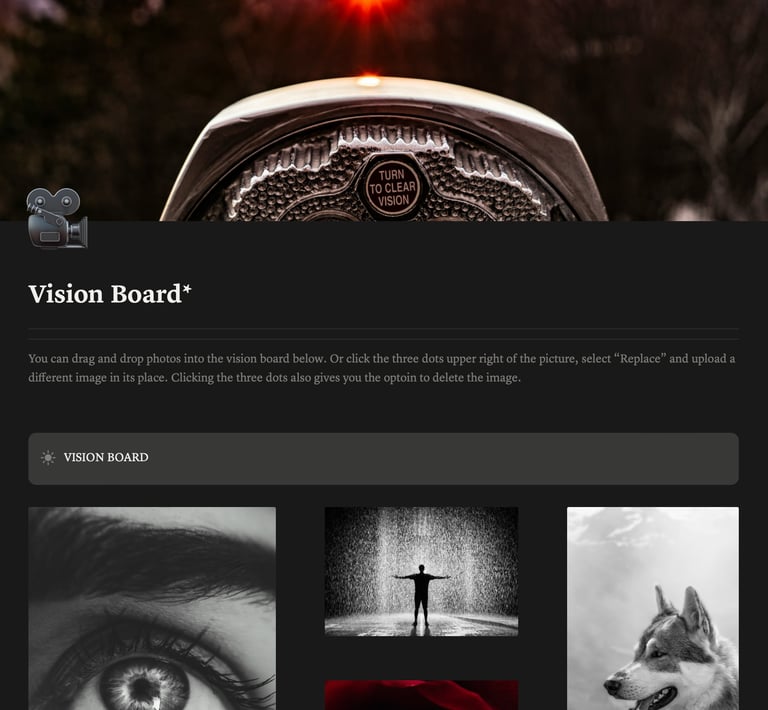
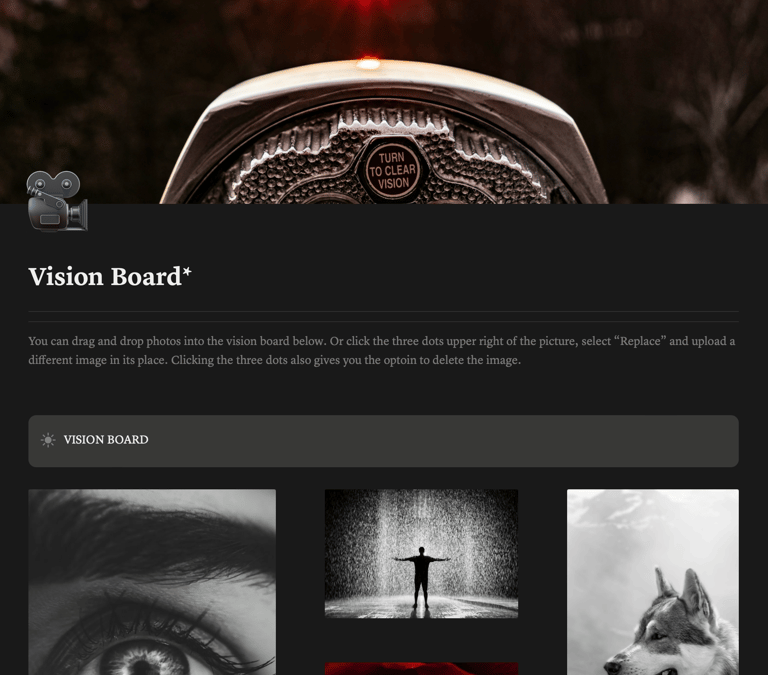
The vision board has evolved far beyond its origins as a craft project. Today, it represents a sophisticated practice in visual intention-setting, where images and words create a curated environment that shapes daily awareness and long-term clarity. Rather than serving as passive decoration, the vision board becomes a living document that bridges the space between abstract aspirations and concrete reality. When designed thoughtfully and positioned within your regular planning rhythm, it offers a gentle yet consistent reminder of what truly matters.
Why Visual Intention-Setting Matters
Our minds process visual information with remarkable speed and depth. Research on the neuroscience behind vision boards reveals how visual cues activate the same neural pathways involved in actual experience, strengthening our connection to desired outcomes.
This isn't about magical thinking. The vision board works by creating repeated exposure to specific concepts, values, and directions. When you encounter these images regularly within your planning environment, they function as anchor points that inform smaller decisions throughout your day.
The effectiveness comes from several mechanisms:
Visual cues trigger emotional responses that strengthen motivation
Repeated exposure builds familiarity with future possibilities
Images bypass verbal resistance and connect directly with intuition
Curated visuals create a reference point for alignment checks
The traditional poster board approach certainly has merit, but digital versions offer distinct advantages for those who already organize their lives through aesthetic Notion templates. A digital vision board lives within the same space you visit for planning, reflection, and task management, creating natural integration rather than requiring separate attention.
Creating Your Foundation
Before selecting images, establish what you're actually working toward. This isn't about listing every possible want. The vision board gains power through focus and intentionality.
Define Your Core Themes
Begin with broader life areas rather than specific achievements. Consider which dimensions of your life need attention, evolution, or deeper alignment.
Write these themes down before searching for images. This prevents the vision board from becoming a random collection of attractive pictures without coherent direction.
Gather Images With Discernment
The selection process deserves time and attention. Look for photographs and graphics that communicate feeling states, not just outcomes. A image of someone laughing with friends might represent connection better than a wedding photo if relationships are your focus. A minimalist workspace could symbolize clarity more effectively than a corner office.
Sources for meaningful imagery:
Unsplash and Pexels for high-quality, emotion-rich photography
Pinterest boards you've naturally gravitated toward over time
Screenshots from films or shows that capture desired atmospheres
Your own photos from moments when you felt most aligned
Art and illustrations that speak to your aesthetic preferences
As explained in SUCCESS magazine's guide to creating vision boards, the curation process itself offers value. Sorting through options forces clarification about what genuinely matters versus what simply looks aspirational.
Building Your Digital Vision Board in Notion
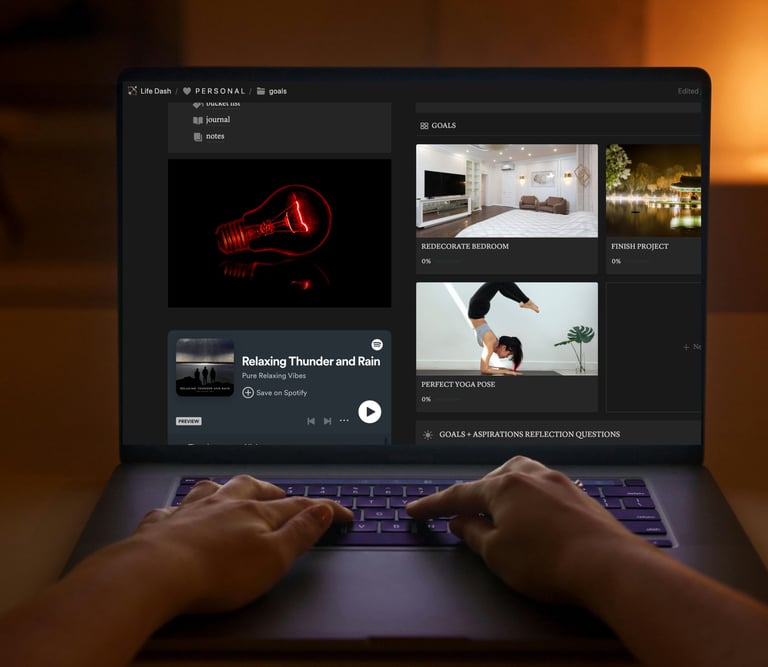
Notion provides an ideal environment for the vision board because it allows both structure and flexibility. Unlike a static poster, a digital board can evolve, link to related planning pages, and integrate with your existing systems.
Structure Options That Support Clarity
Your vision board doesn't need to be a single page. Consider organizing it in ways that mirror how you actually think about your life.
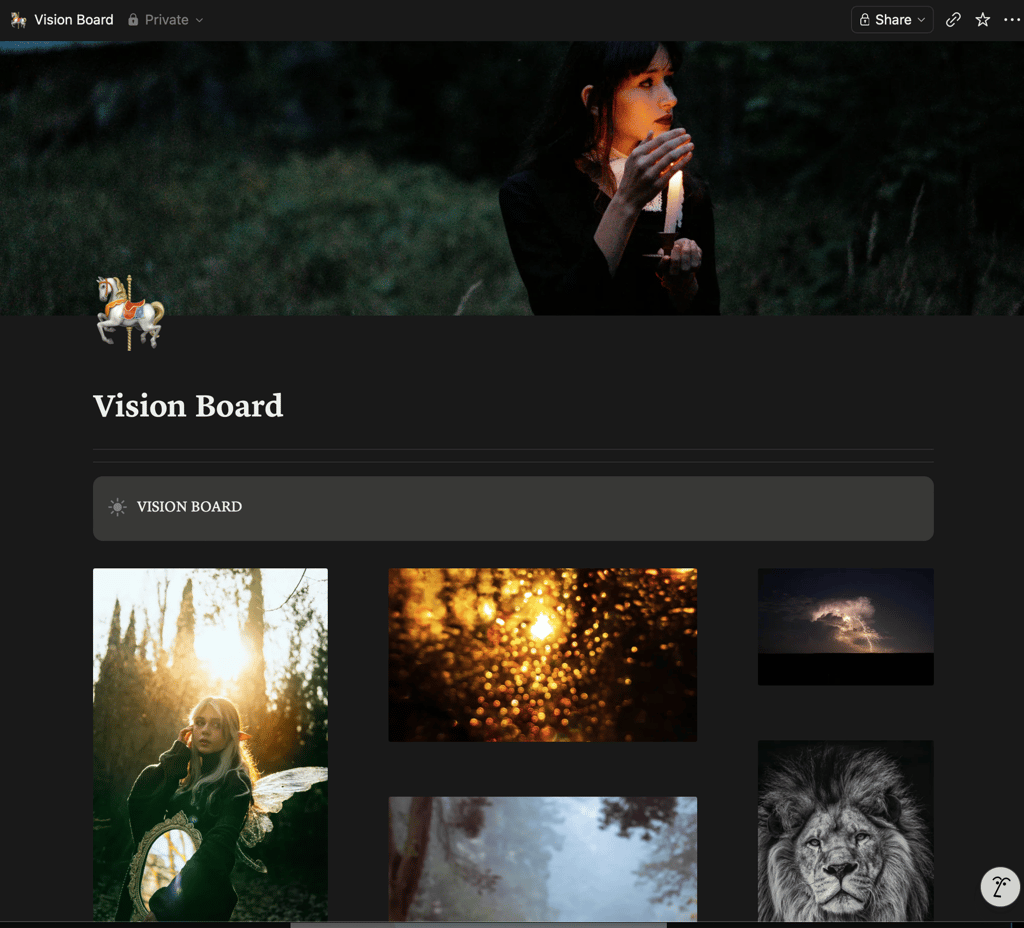
Gallery view works beautifully for image-heavy boards. Create a database where each entry represents one theme or life area, with the cover image serving as the primary visual anchor. Add properties for related goals, action steps, or reflection prompts.
Board view arranges images by category or timeframe. You might organize sections for immediate focus areas versus longer-term visions, or cluster images by the season they feel most relevant to.
Full-page layouts offer the most traditional vision board experience. Use columns, callouts, and toggles to create sections without overwhelming yourself with information.
Add Dimension Beyond Images
The most effective vision boards include multiple layers of meaning. Surround your images with elements that deepen understanding and connection.
Quotes or phrases that articulate the essence of each theme
Specific goals linked to the broader vision each image represents
Action steps that translate inspiration into movement
Reflection prompts for regular check-ins on alignment
Dates or milestones that create gentle accountability
This multidimensional approach transforms the vision board from decoration into an active planning tool. When you review it during your weekly planning ritual, you're not just looking at pretty pictures but engaging with a comprehensive map of your intentions.
Integrating Vision With Daily Practice
A vision board that lives in isolation provides limited value. The real power emerges when it connects with your regular rhythms of planning and reflection.
Link to Your Planning System
Create explicit connections between your vision board and your active planning pages. If one of your visual themes relates to creative expression, link that section to your project tracker or creative pipeline. When an image represents relationship quality, connect it to your social calendar or communication goals.
These links work bidirectionally. As you plan your week, reference your vision board to ensure your scheduled activities actually serve your stated intentions. When you complete meaningful actions, note which vision board themes they connect to, building evidence of alignment over time.
The life planners offered by Aligned Life Planners already incorporate this kind of integration, where different planning layers reference and reinforce each other.
Establish a Review Rhythm
Vision boards require regular attention to remain effective. Without consistent engagement, they fade into background noise.
Monthly reviews work well for most people. Spend twenty minutes with your board, asking:
Which images still resonate strongly?
What has shifted in my priorities or understanding?
Are there new themes emerging that need visual representation?
Which areas need more attention in the coming month?
Quarterly updates allow for more substantial evolution. As seasons change and you move through different life phases, some images will naturally feel complete while others demand expansion. The vision board should breathe and adapt, not remain frozen in January's understanding.
Addressing Common Misconceptions
The vision board often gets dismissed as superficial or ineffective because it's been positioned as a standalone solution rather than one element within a larger practice.
It's Not About Passive Waiting
Simply creating the vision board and then hoping for results misses the point entirely. The images serve as navigational aids, not wish fulfillment. They help you recognize opportunities aligned with your intentions and make better choices in ambiguous moments.
When you're deciding between two job offers, your vision board provides a visual reminder of what you've identified as important. When planning your weekend, it offers guidance about which activities actually serve your stated priorities.
Aesthetics Aren't Optional
Some productivity approaches suggest that beautiful design is unnecessary or even distracting. But for the vision board specifically, aesthetics directly impact effectiveness. Images that feel generic or uninspiring won't capture attention or activate emotional responses.
This is why thoughtfully designed templates matter. A beautifully structured environment makes the difference between a tool you actually use and one you abandon after initial enthusiasm fades.
Digital Doesn't Mean Disconnected
Critics of digital vision boards argue that the physical act of cutting and pasting creates stronger neural connections. While tactile engagement has value, digital boards offer their own advantages: easier updates, better integration with planning systems, and the ability to include dynamic elements like linked databases or progress tracking.
In this Instagram post, creator @np.miranda shared that she creates a vision board each New Year and has found that digital vision boards can be more practical than traditional ones. She noted that physical vision boards often require magazines and other supplies, which can add up over time. As an alternative, she recommends creating a digital collage on your phone, making it easier to access and update throughout the year.
Miranda also described vision boards as a useful conversation starter and a way to keep goals top of mind. According to her, regularly visualizing and talking about your aspirations can reinforce them and make them feel more attainable. (Source: Instagram post by @np.miranda (accessed June 2026).
While vision boards are not a guarantee of success, some psychologists suggest that visualization and repeated exposure to goals can help direct attention toward opportunities that align with those goals. This is often connected to the brain's Reticular Activating System (RAS), a network involved in filtering information and determining what captures our attention. When a goal is repeatedly visualized and reinforced, people may become more likely to notice relevant opportunities, resources, and actions that support it.
Advanced Applications
Once you've established a basic vision board practice, consider these more nuanced applications that deepen the work.
Theme-Specific Boards
Rather than creating one comprehensive board, develop separate boards for different life dimensions or projects. A career vision board might live within your business planner, while a wellness board integrates with your habit tracking system.
This separation prevents overwhelm and allows each area to receive focused attention. It also makes updates easier since you're not constantly revising one massive compilation.
Collaborative Vision Boards
Partners, families, or creative collaborators can build shared vision boards that articulate collective aspirations. This practice surfaces assumptions, reveals misalignments, and creates shared language around future direction.
The process of selecting images together often proves more valuable than the final product, as it requires articulating what you hope for and why certain visuals resonate.
Reflection Integrations
Pair your vision board with regular journaling prompts that explore the gap between vision and current reality. Rather than treating this gap as failure, examine it with curiosity. What's preventing movement in certain areas? Which visions need refinement based on lived experience?
The Notion journal format supports this kind of reflective practice, creating space to process insights that emerge from engaging with your visual intentions.
Making It Personal
Generic vision board advice often misses the reality that different people need different approaches. Someone with ADHD might benefit from fewer, bolder images with strong visual contrast. Someone drawn to minimalism might prefer simple line drawings over photograph collages.
Your aesthetic preferences aren't superficial. They reflect how you process information and what environments support your clarity. Creately's comprehensive guide offers various format options that can be adapted to individual needs.
The vision board works best when it feels authentically yours, reflecting not just your goals but your personal style, values, and way of engaging with the world. This is why pre-made templates serve as starting points rather than final solutions. The vision board template from Aligned Life Planners provides structure while leaving room for personalization.
Trust your intuition about what belongs on your board. If an image feels right even when you can't articulate why, include it. If a theme everyone says should matter doesn't resonate, leave it out. The vision board represents your internal landscape, not borrowed aspirations or cultural expectations.
Each refresh doesn't require starting from scratch. Sometimes you'll simply rearrange existing images, add new layers, or remove elements that feel complete. Other times, you'll recognize that fundamental priorities have shifted and more extensive revision is needed.
Document what you remove. Creating an archive of past vision boards provides rich material for annual reviews and helps you track how your relationship with certain aspirations has evolved over time.
The vision board becomes most powerful when integrated into a larger ecosystem of intentional planning and regular reflection. Visual intention-setting works not through magic but through consistent exposure to carefully chosen images that remind you what truly matters. When you're ready to create a beautifully designed planning environment that supports this kind of clarity, explore the thoughtfully structured templates at Aligned Life Planners that make it easy to maintain both vision and daily practice in one cohesive, aesthetically refined space.